
What Will We Remember from the 2026 WSOP?
The 2026 WSOP delivered record-breaking fields, a shot clock controversy, and a hero call that divided the poker world.

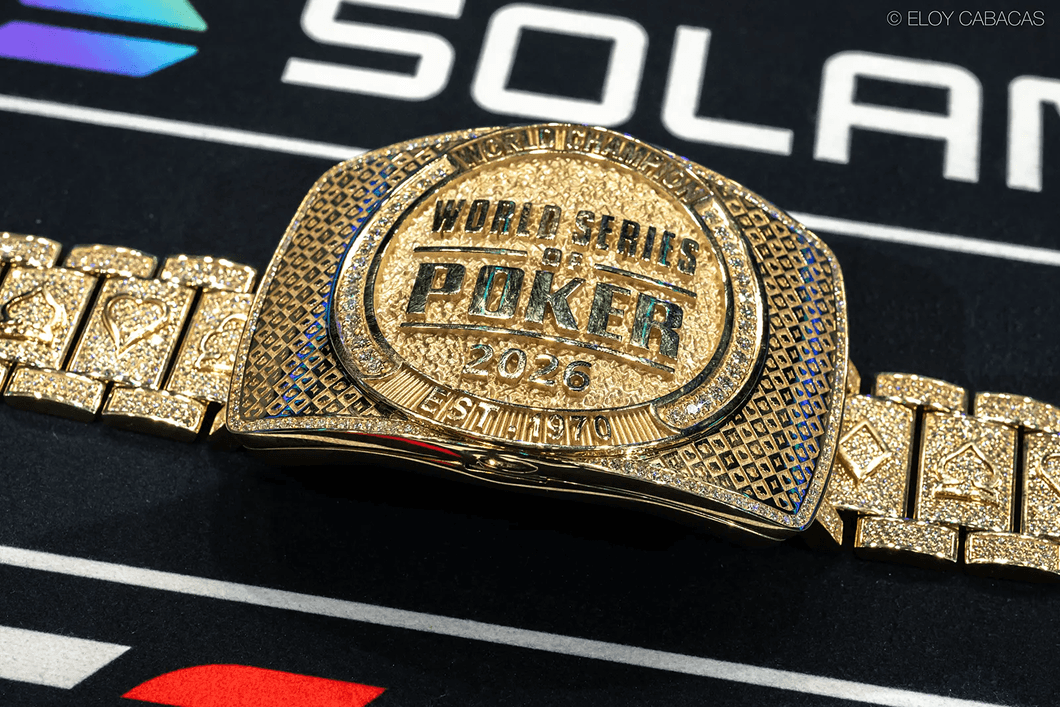
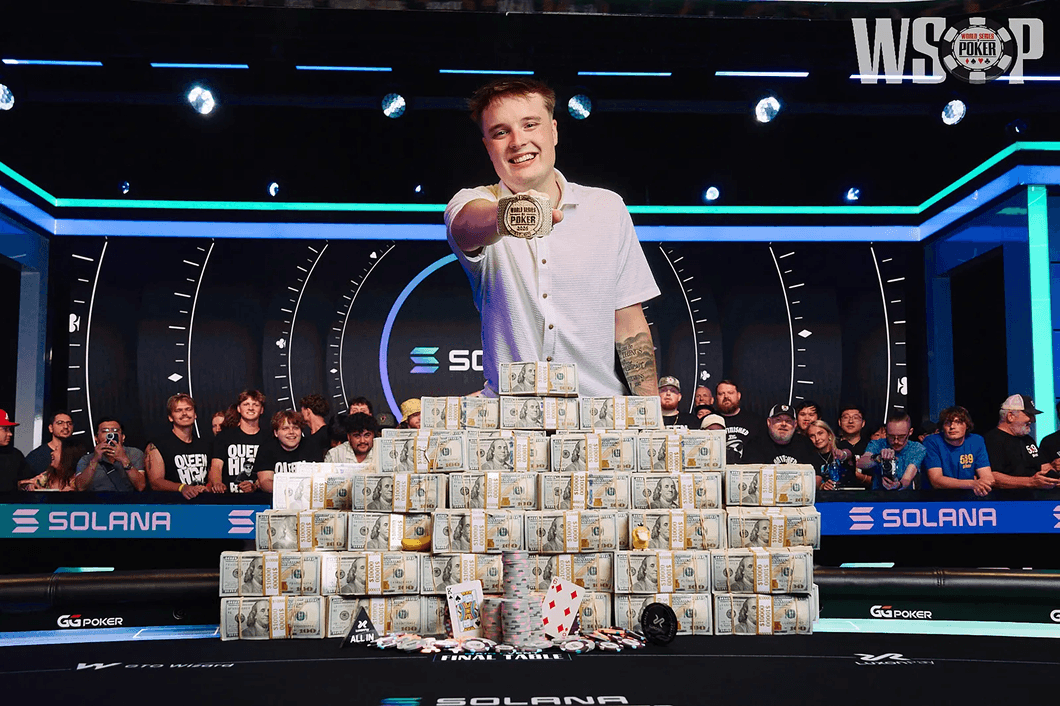
The first week of August brought the delayed 2026 WSOP Main Event final table — and with it, the symbolic end of this year's summer series.
The 57th annual World Series of Poker awarded 100 live bracelets, alongside another 30 online bracelets on WSOP Online in the United States. Across more than seven weeks of live play, the poker world's attention was fixed on Las Vegas. That was plenty of time for new stars to emerge, controversies to unfold, and Cinderella stories to capture the community's imagination.
What were the biggest stories of this year's series?
Shot Clocks Were Introduced — Then Removed
For the first time in its 57-year history, the WSOP introduced a shot clock in the Main Event. It was not part of the original structure, however. The change came midway through the tournament in response to one of the summer's most controversial hands.
On Day 6, with 72 players remaining, Loren Klein spent around 15 minutes facing a bet while hoping to secure a $20,000 pay jump. The next elimination would increase the payout from $105,000 to $125,000. The floor eventually called the clock, Klein called with his last chip, and he was eliminated in 72nd place for $105,000.
When Day 7 began, the shot clock was in place. Players had 20 seconds to act before the flop and 30 seconds after it. Each player also received six time-bank cards per day, with every card providing an additional 30 seconds. If the time expired, the player's hand was checked when possible or folded when facing a bet.
Although action clocks have been used in many poker events for years, introducing one in the middle of the Main Event sparked debate among professionals and recreational players alike. The new rules remained in effect through Day 8, but before the delayed final table, the WSOP reversed course:
After discussions with players and tournament staff, we've made the collective decision not to use a shot clock at next week's WSOP Main Event Final Table.
Players and tournament staff could still call the clock when they believed someone was taking an unreasonable amount of time, but the automatic timer was gone.
For now, there is no clear indication that a shot clock will become standard in the 2027 Main Event. Slow play remains a recurring problem, however, and action clocks are already common in other high-profile series. The discussion is unlikely to end here.
The Numbers Were Once Again Huge
By almost any measure, the 2026 WSOP produced enormous numbers. The 100 live events generated a record 251,899 entries and awarded $469,975,059 in prize money, with players from 149 countries represented across the series.
The Main Event attracted 9,208 entries, making it the fourth-largest field in its history. That is still an exceptional result, although attendance fell by 527 entries from 2025 and by 904 from the record of 10,112 set in 2024.
Several individual events nevertheless set new attendance records.
Event #87: $1,000 Mystery Bounty Pot-Limit Omaha became the largest live PLO tournament in history, attracting 4,764 entries. The result is another sign of Omaha's growing popularity.
If PLO tournaments are something you would like to explore, PLO Genius gives you the tools to study them — alongside a wide range of features for cash-game players.
PLO was not the only format to reach new highs. Three No-Limit Hold’em events also set new attendance records:
- Event #18: $1,500 Monster Stack attracted 11,933 entries, setting a new record for the event.
- Event #63: $1,000 Mystery Millions drew 22,811 entries, the largest field of the 2026 WSOP and the biggest $1,000 live tournament ever held.
- Event #72: $1,000 Mini Main Event reached 12,560 entries, establishing a new record for the event.
These figures still require some context. Entry totals do not represent unique players, and several of the largest events offered multiple starting flights and re-entry opportunities. In the Monster Stack, for example, one player could enter as many as eight times.
That structure has fueled debate over what attendance records really tell us. Re-entries make tournaments more accessible after an early elimination and help create larger prize pools, but they also favor players with bigger bankrolls and can make the experience less appealing to recreational participants.
The Hero Call That Divided the Poker World
One of the final hands of the Main Event began as an unraised heads-up pot and grew into a 460-million-chip confrontation — approximately 115 big blinds — by the river.
Lucas Jumalon limped Q♠5♦ on the Button, and Lauri Saaskilahti checked J♦3♦ in the Big Blind. On an A♠K♠4♣ flop, Saaskilahti check-called a 4-million bet into 12 million. The J♠ on the turn gave him a pair, but Jumalon increased the pressure with a 40-million bet into a 20-million pot. Saaskilahti called again.
The 6♠ completed the board and gave Jumalon a queen-high flush. After Saaskilahti checked, Jumalon bet 180 million into 100 million. Saaskilahti eventually called with third pair and no spade, leaving himself with only eight big blinds. He was eliminated two hands later.
The call immediately divided the poker community. Many viewers saw it as a clear blunder, while several top professionals argued that J♦3♦ may have been a more reasonable bluffcatcher than its absolute hand strength suggests.
It is tempting to judge the call purely by its outcome, but that would oversimplify the decision. From the outside, we cannot fully account for the time the players had spent together, Saaskilahti's reads, Jumalon's previous tendencies, or the pressure of playing heads-up for a $4 million difference between first and second place.
At the same time, Saaskilahti had several opportunities to leave the pot. He held only a marginal pair and faced increasingly polarized aggression: a one-third-pot bet on the flop, a bet of twice the pot on the turn, and a bet of 180% of the pot on the river. Against many opponents, that line will simply not contain enough bluffs to justify calling down so lightly.
The most useful question, however, is not whether third pair looks too weak to call. It is whether J♦3♦ belongs among the best bluffcatchers in the range Saaskilahti takes to the river.
Recreating the hand in a solver is not as simple as entering the board and bet sizes. We do not know the players' exact preflop ranges, how far they had already deviated from a theoretical baseline, or how their reads influenced the action. A solver cannot provide a definitive verdict on those unknowns, but it can help identify what matters: the range that reaches the river, its value-to-bluff ratio, and which hands work best as bluffcatchers under different assumptions.
The river numbers provide a useful starting point. Facing a bet of 180 million into 100 million, Saaskilahti needed to win approximately 39.1% of the time for a call to break even based on direct pot odds. His minimum defense frequency was approximately 35.7%, meaning that, in a simplified model, he would need to continue with that share of his river range to prevent Jumalon from making an automatic profit with every bluff.
Those figures answer different questions. Pot odds tell us how often a specific hand needs to win, while minimum defense frequency estimates how much of the overall range should continue. Neither determines whether a particular hand should call. That depends on range construction, blockers, and the opponent's expected bluffing frequency — all factors worth considering before judging the decision by its outcome.
Most players are unlikely to face this exact situation heads-up in the WSOP Main Event, but the same questions arise at every level: what range do you reach the river with, how does your hand compare with the rest of it, and what price are you getting?
These are exactly the types of decisions Deepsolver can help you study.